



Hip Replacement: Myths and Facts | English & Telugu
Hip replacement myths and facts are easier to understand when the treatment is explained in plain language. This bilingual English–Telugu guide addresses common questions about surgery, recovery, movement and long-term function. It is designed to help patients and families prepare for a well-informed conversation with their orthopaedic surgeon.
When is hip replacement considered?
Hip replacement may be discussed when persistent hip pain and stiffness interfere with walking, sleep, work or everyday activity, and appropriate non-surgical treatment no longer provides enough relief. The decision is individual. Symptoms, examination findings, X-rays, general health, activity goals and the likely benefits and risks all need to be considered together.
The procedure replaces damaged joint surfaces with prosthetic components; it does not replace the whole leg. Recovery is gradual and usually combines pain control, safe mobilisation and a rehabilitation programme tailored to the patient. Age alone does not decide suitability, and realistic expectations are important.
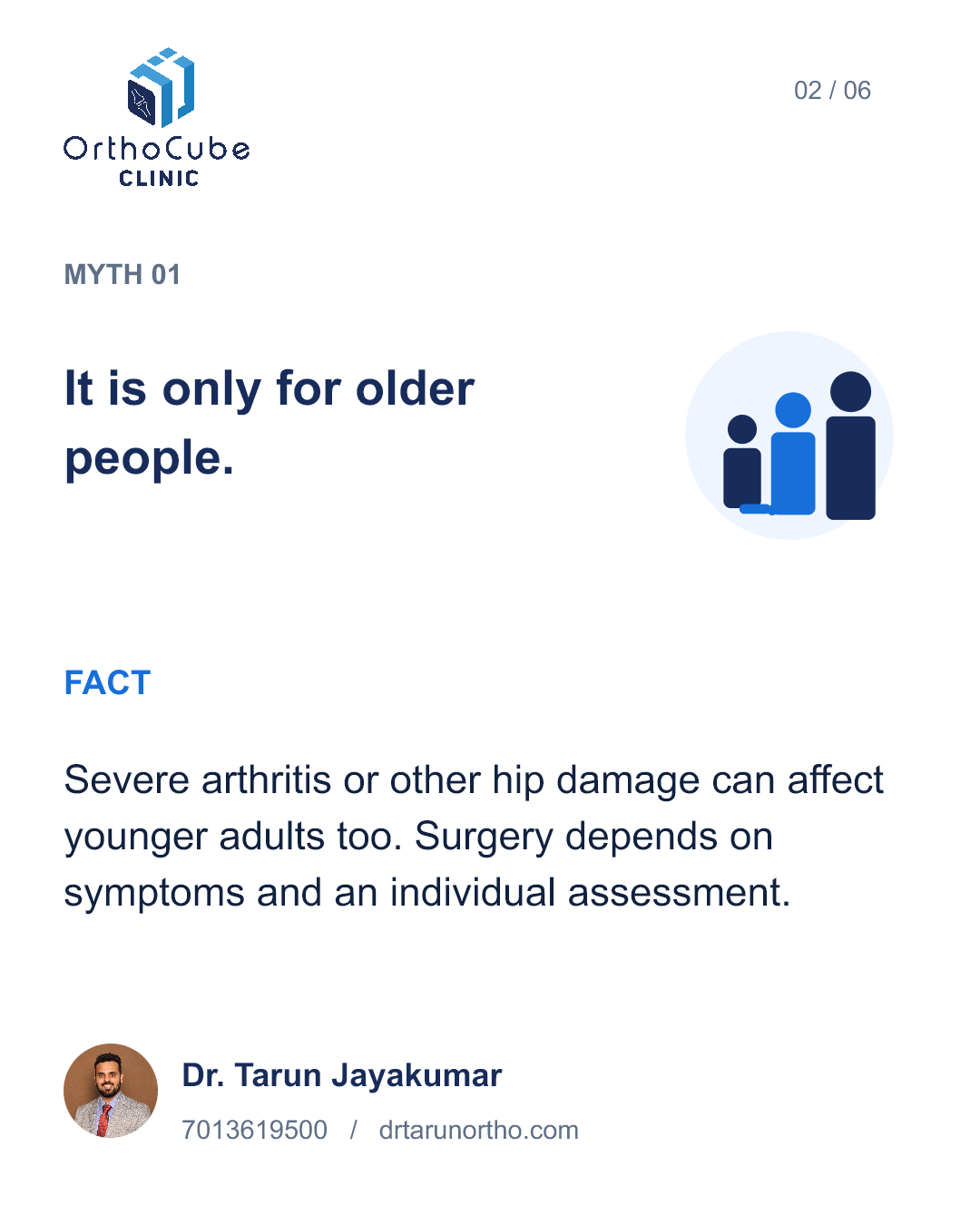
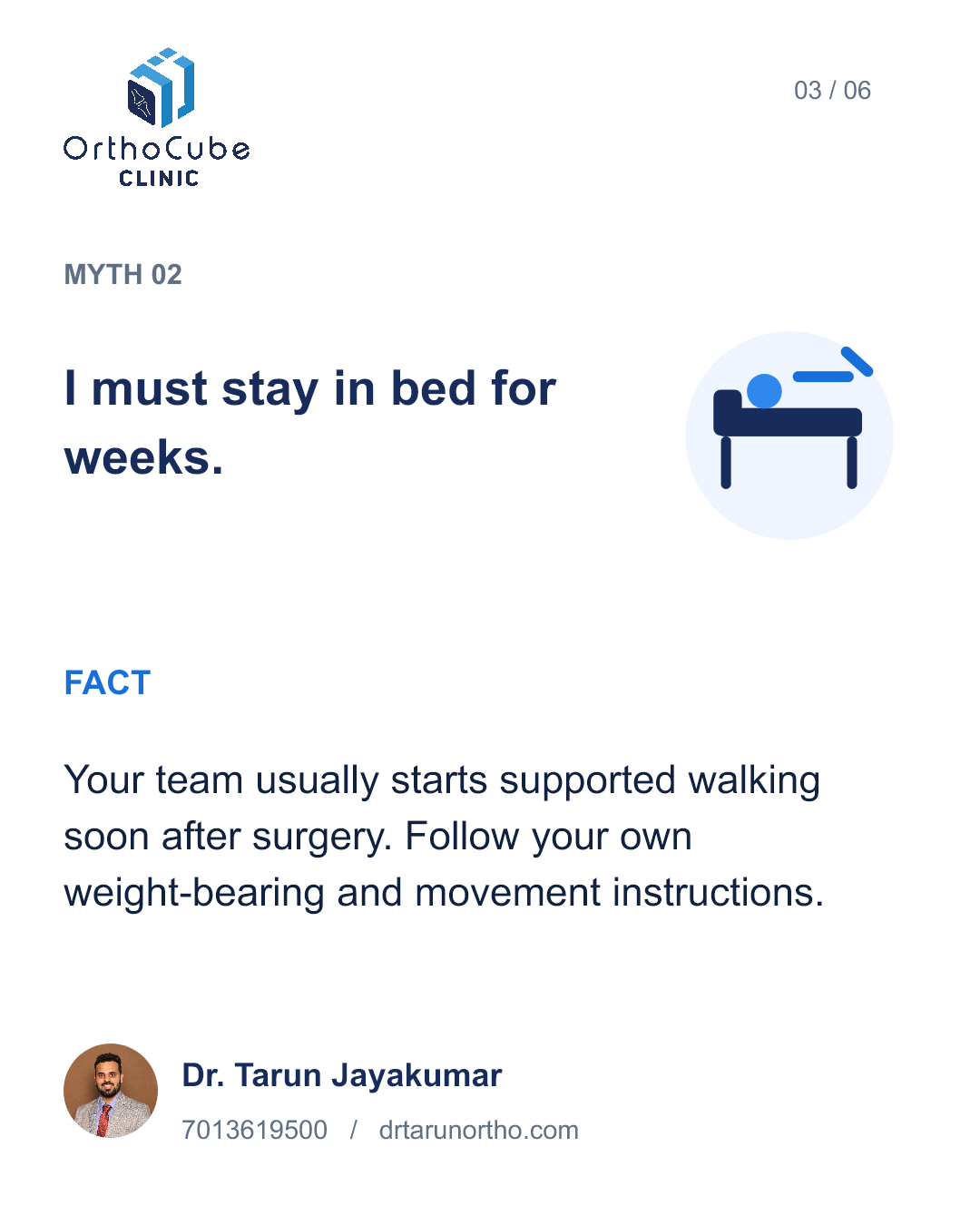
English: Hip Replacement Myths & Facts
Swipe horizontally to view all six slides.
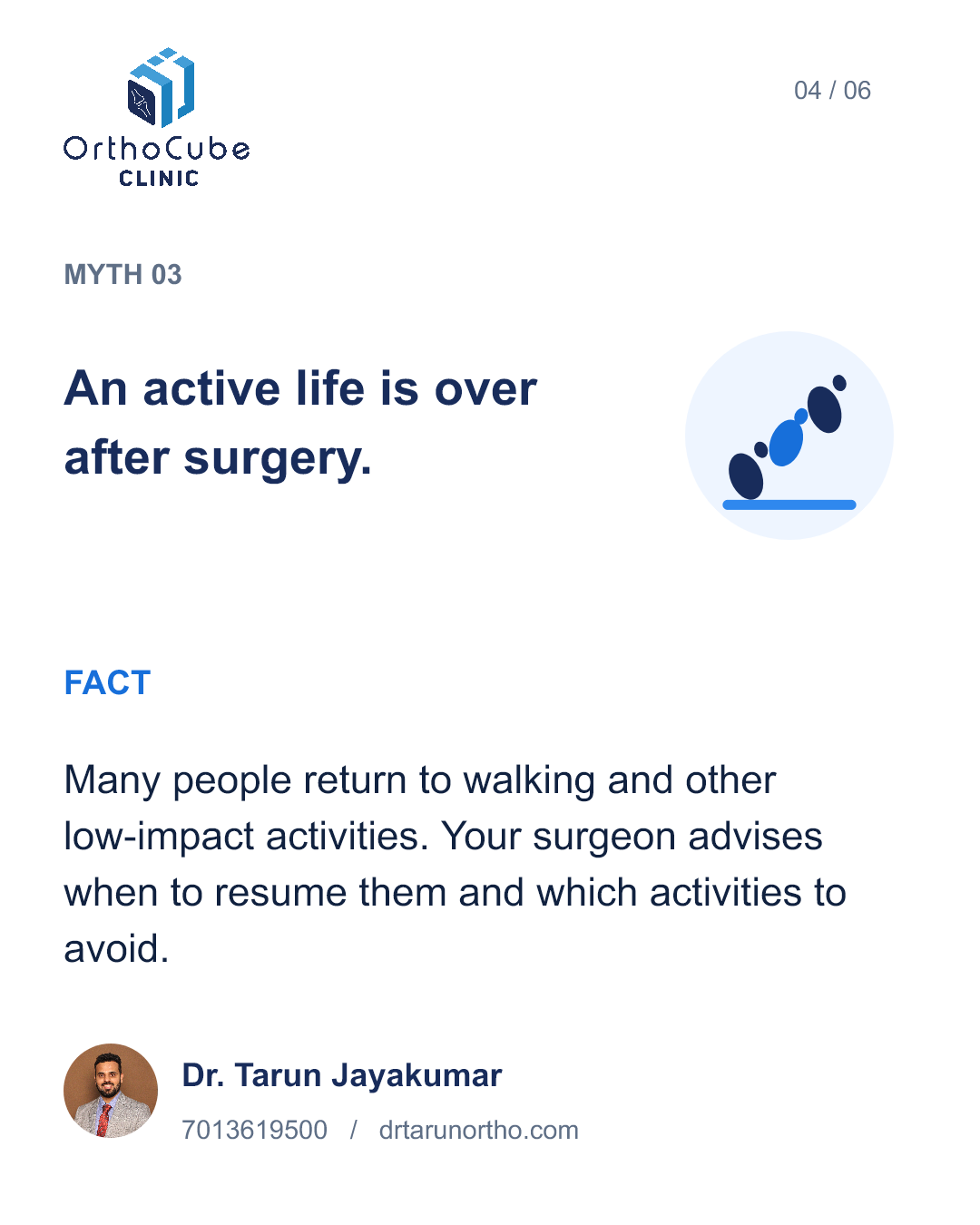
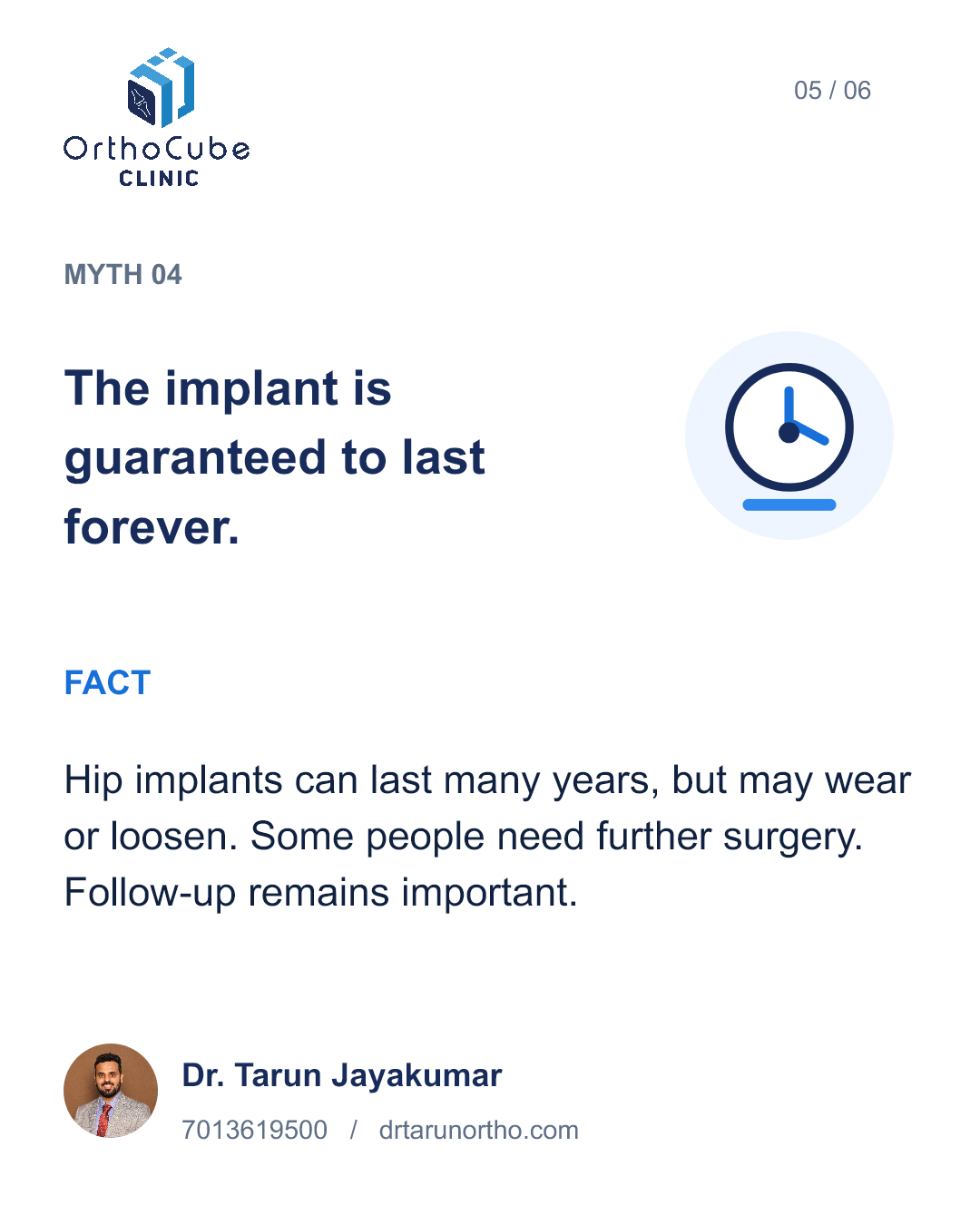

తెలుగు: తుంటి మార్పిడి — అపోహలు & నిజాలు
ఆరు స్లైడ్లను చూడటానికి కుడి లేదా ఎడమ వైపు స్వైప్ చేయండి.






తెలుగులో ముఖ్యమైన విషయం
తుంటి మార్పిడి శస్త్రచికిత్స అవసరమా అనే నిర్ణయం ప్రతి రోగికి వేరు. నొప్పి తీవ్రత, నడకలో ఇబ్బంది, ఎక్స్రేలు, ఇతర ఆరోగ్య సమస్యలు మరియు రోజువారీ అవసరాలను పరిశీలించిన తర్వాత ఆర్థోపెడిక్ సర్జన్ వ్యక్తిగత సలహా ఇస్తారు.
Preparing for a consultation
- Bring relevant X-rays, scans and previous medical records.
- List your medicines, allergies and other health conditions.
- Note how pain affects walking, sleep, work and daily activities.
- Ask about expected benefits, risks, rehabilitation and realistic recovery timelines.
Related reading: Hip arthritis: early signs and treatment options and what to expect before, during and after joint replacement surgery.
Important: This information is for general education and does not replace individual medical advice. Suitability, risks and recovery differ from person to person. Please consult an orthopaedic surgeon for a personalised assessment.
