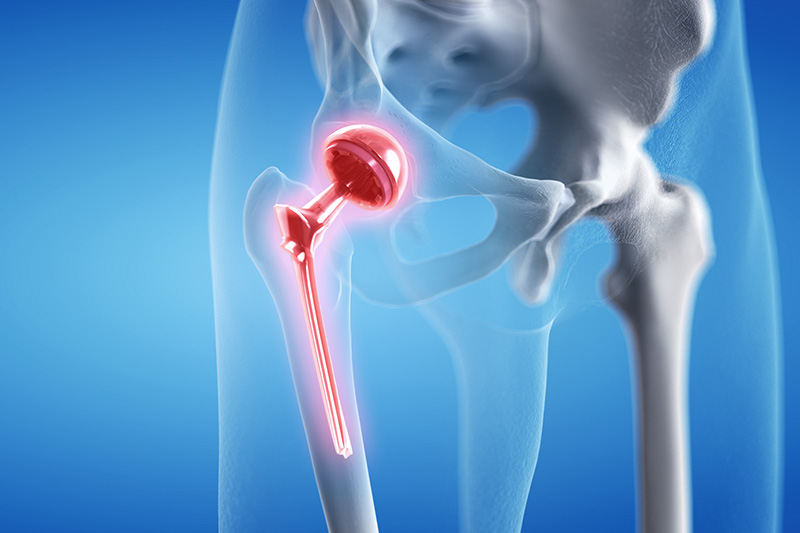

Complex hip and knee reconstruction
Revision Joint Replacement
A painful or failing replacement requires a structured investigation. Infection, loosening, instability, fracture, stiffness and pain arising outside the joint require different plans.

Reasons for assessment
Understand why the replacement is painful.
- Increasing or persistent pain.
- Recurrent swelling, warmth, wound drainage or unexplained fever.
- Instability, repeated giving way or hip dislocation.
- A change in alignment, shortening or new walking difficulty.
- Fracture around the implant.
- Abnormal imaging, implant wear or suspected loosening.
Investigation
A diagnosis-led revision pathway.
- Detailed history and review of the original operation.
- Examination of the joint, spine, gait, soft tissues and circulation.
- Current and previous X-rays for comparison.
- Blood markers and joint aspiration when infection is possible.
- Selected advanced imaging when it will change the plan.
- Review of implant details, cultures and previous antibiotic treatment.
Reconstruction
Revision surgery may involve more than changing an implant.
Revision may replace one component or reconstruct the entire joint. Bone loss, soft-tissue damage and infection can require specialised implants, stems, augments, cones, graft, fixation devices or staged treatment.
Important
Seek urgent assessment for fever with a hot swollen replacement, wound drainage, sudden inability to bear weight, a fall with deformity, recurrent dislocation, chest pain or breathlessness.
Discuss your concern with Dr. Tarun.
Appointments are available at KIMS Hospitals, Gachibowli and Hale Clinics, Kondapur.