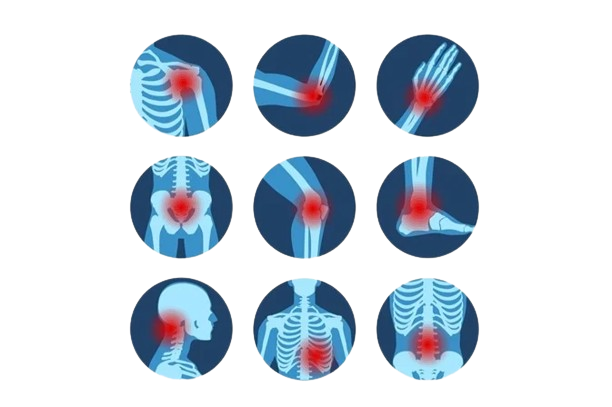

Orthopaedic Rheumatology
When pain involves several joints, the pattern matters. Assessment considers inflammatory disease, mechanical damage, tendon problems, crystal arthritis, infection and other causes.

Patterns that deserve evaluation.
- Prolonged morning stiffness or swelling in several joints.
- Repeated hot or swollen joints.
- Pain accompanied by fever, rash, eye symptoms, bowel symptoms or unexplained fatigue.
- Known inflammatory arthritis with worsening deformity or function.
- Joint damage that may require reconstructive surgery.
Coordinated diagnosis and treatment.
The pattern of affected joints, duration of stiffness, family history, medicines, examination, imaging and selected blood tests help guide the diagnosis. Some conditions require coordinated care with a rheumatologist for disease-modifying treatment.
Medical control
Inflammation and disease activity should be managed with the appropriate medical specialist.
Structural problems
Orthopaedic care may address deformity, tendon injury, nerve compression, instability or advanced joint damage.
Surgical planning
Medication timing, infection risk, bone health and rehabilitation are considered together.
A single hot swollen joint with fever can be an infection and requires urgent medical assessment.
Discuss your concern with Dr. Tarun.
Appointments are available at KIMS Hospitals, Gachibowli and Hale Clinics, Kondapur.